Biomedicinals Market Analysis_ Lalita_Kevin_Annie
Mon, Mar 25, 2024 9:00AM • 38:03
SUMMARY KEYWORDS
people, money, local, market, kevin, asheville, working, capital, producers, spreadsheet, stumbling blocks, black cohosh, folks, guaranteed, pampered, tool, big, starting, conference, point
SPEAKERS
kevin jones
00:00
And Ben had been feeding it. Right. It was following my imagine so there’s a lot of urban wildlife. My partner had a coyote living in his backyard, and then Wow, another one. And then it was like kind of a family of coyotes. And they’re, you know, they’re on a canal. So it’s an irrigated backyard of it. We’re talking about Phoenix. And so it’s a little it’s a very urban, but it feels a little more forested than and just wet than typical Arizona. And there’s a ton of wildlife that comes through there.
00:33
Everywhere. Everywhere. We have Quayle here, but there’s, they’re very, they’re and they’re so loud. It’s like, I went out into the country in Arizona, they were just coiled around and squabbling and
00:48
screaming and you walk up and you kind of spook them. And then they just fly short distances. Yeah. Oh, that’s awesome. I’m glad it was a good trip. Yeah. Good. How are you, Kevin?
kevin jones 01:01
I’m doing fine. How are you? I’m well, I’m well. Good. Yeah, well, I have some ideas of what I’d like you to study and as does Lalita. I’ll toss mine in and then the leader actually knows the field you’re looking at. But I’d love you to look at the Biomedicinals industry from a standpoint of stocks and flows like Donella Meadows would look at and you know, where are the places that if there was a pooled and shared resource, like maybe more sufficiently supplied seed collectives, you know, we where is there a scarcity? Where can the flow be changed? Where is there a block? And, you know, we don’t really need it sighs because you know, we know it’s been we also have this guaranteed from see thing from Warren Wilson, that you know, counters wild harvest and Jinsei principally that is so damaging to the riverbanks and stream backs. And it’s huge. I mean, if you look online, there’s all kinds of ginseng buyers, you know, redneck sellin ginseng, tearing up the rivers and with the guaranteed from seed you can have, you know, we think you can get a premium on this good thing didn’t harm the river. You know, I mean, I think there’s a lot of things around that and that’s also I think Black cohosh and golden seal are the principal other big things that they look at and say
02:38
Oh, hush and golden seal. Okay.
kevin jones 02:39
And then we’re gonna have, at the same time, a bottom up, producers centric view of the industry that Lalita will be leading with somebody from Warren Wilson who’s, you know, in the industry is local etc. But we’d love a more systemic view from you. We want so we’re raising a fund with Eagle Market Streets, the CDC, the Community Development Corporation that I’ve built another fund with, that’s solving the problem of friends and family funding for black and brown sole proprietors that don’t have original uncle don’t have friends and family might funny, and it’s working. You know, we’re in the county’s budget for two years, and we’re the lowest cost drug operator and it’s all working like it’s working well. But this is so it’s working with the same group. And they would be doing things like having a loan loss reserve and actual underwriting we were doing the looking at how the industry fits together. And we’re doing it with a new philanthropic investment. Vehicle. And so the bigger picture is that we’re experimenting, we mean me with some people, and what was ego and to get them to figure out that and so this is a give to invest tool, I need to get impact assets $3.5 billion donor advised fund was started by my buddy that we co founded the SOCAP conference together and did a an Impact Fund and that kind of thing. And he’s come up with a thing where you can have a sub account for $250 So that means you have your own little philanthropic foundation for doing $50. But to get it out, he required 25,000 We’re working with Eagle, the local CDC so you can put it out at 5000 But that still means either and nonprofits are rushing at it because if you give your money back comes back so all know if it says some sort of Pat cap x that’s in that range of a $10,000 kind of thing, and it can pay back patiently and they could get that money and then but they’re givers get that money again to give with and then they get more connected because it’s like achieve alone where you see the loan happening. But Chiva you know, requires you to have 25 friends and $25 to get on the platform. So it’s only for people who have money. This is solving a problem for people who don’t have money. So we’re doing and we have somebody doing market research on that where it’s being used by nonprofits locally, and then we’re doing the research on how it works in this vertical. We think it’s gonna be a good really big thing we have you know, we have lots of imagination of what the user experience will be like, but we don’t have any experience. But you know, what, people will will will discover they have more money to give with and they’re just used to giving in and giving it to be gone. So this is the people have been doing this philanthropic investing and foundations have for you know, 30 years. This is enabling local people to give to things they care about the same tools that the billionaires have been using for a long time so it’s bringing it down and making it available to scrappy nonprofits who can raise 5000 and then give their donors a great experience. So this is not the donor side. This is the we’re sitting we’re subverting GoFundMe over here. So you would go to your friends and family get a GoFundMe, but now your friends get that money back. And so and so they get connected. And so what do you do with that? So that’s, we’re doing that research in this vertical, we want you to describe the system to
06:46
us for SCADA system Biomedicinals. Broadly Yes.
06:51
So one of the ways that I think about this is that if we do this right, we will succeed in lowering barriers to entry and success for people who are doing the right things and simultaneously, especially with the guaranteed from seat angle, we will succeed in creating barriers to entry for people who want to go and rip things out of the forest or other people’s land. So you know, there’s the kind of one thing that I’m wanting to understand better is the people who we would really like to see this tool in power. Yeah, what’s keeping them from from like, what what’s keeping them from being able to just break into this market already? Like why are they already there and and what what stumbling blocks are they likely to find? And I think Kevin is really right, that access to capital is another, like main issue that people in this community are encountering. Aside from just you know, maybe technical assistance, that’s a hypothesis that I have, but I really like to understand what are the stumbling blocks like what would we have to address and we see this succeed and and what if any assumptions do you see that we’re making that we’d have we’d really have to believe in order for this to be a model that works. I think really a lot of Kevin’s right that a lot of it is access to capital. So for example, I met with this woman named Sarah Nunez the other day, who’s she’s really incredible. I really enjoyed my meeting with her. And she is she has a little urban herbal farm, and what she has been doing is distributing herbal care packages and particularly respiratory herbs and minority communities. And she’s found that there’s a lot of demand for that. She wants to have an herb drying facility, and she was going to locate it in her house, and then ran across one of the same challenges that I encounter with like my jams and jellies, which is she has a dog that comes into her house. So that would be a violation of copyright laws. So now she has this need for like a $10,000 herb drying facility that she’s trying to put together. She’s a great hustler. So she’s even found a number of people who are willing to contribute capital to this cause but they’re in the situation of going, Who do I write this check to? Because if I write it to you personally and you’re doing this at your house is this 1099 miscellaneous non employee compensation, is it a gift What the heck is it? And she setting on the other side of the equation saying I have a 501 see three but this is also my residence. And I’m wanting to use some of this money for like a rainwater catchment system to water my herbs but does that mean I own my house but the nonprofit owns the gutters?
kevin jones 10:06
No, it’s not in an urban should go to jail. Yeah, so it’s
10:09
it’s but so this kind of tool could be really useful because since it is a zero interest loan from her side of the equation, she gets the capital without it having to be 1099 miscellaneous taxable income, which she doesn’t really want to cover, especially since her charitable work. And the donors, you know, because there’s a financial structure around it, have someone to write a check to where it counts as a charitable contribution. And so I can see this tool that you know, Kevin is putting together is really meeting a serious need in terms of creating access to capital and I’m just really wanting to understand structurally in the in this vertical, what are the other stumbling blocks or challenges that that Kevin and I really need to be thinking about? Because one of his goals is to, to nurture the ecosystem so that more people can succeed?
kevin jones 11:03
Right? That’s, that’s well said. That’s really I’m glad I got my honor on. Yeah, that
11:08
makes a lot of sense. Do you foresee things like you mentioned technical assistance and access to capital, things like people being farther apart as a constraint, like how they’re actually able to access shared resources? Things like that, or is it
kevin jones 11:24
Yeah, there was a group seven or eight years ago, by Biomedicinals. ago, I just happen to sit in on when Sarah day if you remember. Anyway, she was trying to do Iceland here. And they had something there was a moveable dryer that you would bring, like a little trailer and they they ran into, you know, sheet metal problems, essentially. I mean, they weren’t able to build it in a way that could be left because they were also seeing a lot of the gig workers or herbal producers or gig workers, they have to go into tables or do whatever they have to go go make some money otherwise. So that was I don’t know what happened to that they they did build a prototype. But but that was that was an attempt to solve that. Drawing problem. Gotcha.
12:18
One thing that I think just looking at my own situation, because I am a farmer who’s grows herbal medicine, that I that I, one of the question marks for me is, this is an area that has a really robust and diverse economy around herbal medicine. There’s people understand the story of how it can be helpful in healing in this area. But the question is, what exactly is the go to market strategy for somebody in my situation, say that I’m producing 50 pounds of black cohosh a year? Do I walk into the French Broad food coop with a burlap sack? No. How does that? What does that actually look like? And one hypothesis that that Kevin and I have is that it would be useful to explore the question of do we create a relationship with someone like Gaia herbs that is local, but then you have the question of market power, right? So I don’t necessarily know enough about Gaia to have any reason to question their integrity but they’re a business which means they’re going to get the best price they can. And to what extent is that going to be something that is going to support the farmers or is that going to Yeah, put a lot of pressure on them, you know, what, what are what are the strategies that do
kevin jones 13:42
Do you want to go to a big player or you know, there’s all these tourists that has spas and hotels and you know, selling directly to them? would be maybe more margin for the producer. I don’t want to the big dog is is the big dog because they put on a little dogs. They have market dominance. And then the thing Yeah, you know, to think about is is you know, how our capital fits into you know, can we tell a story of our capital to the you know, the give to invest capital to the tourists where we can get the donor money around a, you know, a give to this essential oil, you’ve already, you know, bought here, you know, and so we but, but it’s a connection to relationship, you know, and we obviously, a lot of these folks want to sell subscriptions to their you know, I’ve got a guy that is he’s, I email him when I’m out of Lion’s Mane, you know, he’s a local guy, and I’ve gotten to know I mean, so you know, replenishment is a big thing too. What’s the pattern of replenishment and, you know, is what, what’s the cost? Is there a distributor? Is there a cost of distribution, all kinds of things to know? And how will the retailers what’s the relationship between them and the producers or the middle? What are all those relationships between you? The tourists paid lots of money when we did this earlier, I was working with Dave LM, the forester at Warren Wilson on his and we were talking to like boutiques in Brooklyn network paying you know, so much more for the product he was producing, and how you get to those folks, you know, and how you sell to them in a way that that we think maybe guaranteed from seed is a, you know, a way to reach bowtique coastal, herbal places. Yeah,
15:47
do you imagine these products being sold outside of the region or Oh, yeah.
kevin jones 15:53
You want to hear from the people in Brooklyn in San Francisco? Yeah, you know, I mean, you want the tourists and you want the tourists subscribe, but you know, you want you want people in, you know, wherever in New York and
16:06
I think it’s gonna depend to some extent on what you learn about you know, what, what the margins and you know, level of customer handholding it takes in the various go to market channels. Where I think there is a question mark, there’s definitely different ways that people get this type of medicine into the market, and they’re gonna have different dynamics. But I don’t know that we’ve done any sort of deep research into what those go to market strategies are and kind of how you would think about you know, because I would love for the for us to be able to go to somebody like Sarah and say, here’s here’s what we’ve learned. Is is right, is going to work here’s how you can because she’s she is highly educated and extremely intelligent and can capable I think of making this a business for herself. She’s she’s had to take a full time gig with United Way in the interim, just to keep body and soul together. But this is kind of where her heart is. And I’d love for Kevin and I to be able to go back to her and say here are some learnings that we can offer you about, you know, how you might think about I mean, she’s she’s sort of a special case because she’s already identified a market that has demand for products. So where where it’s going to end up going isn’t really the question, but there’s all sorts of intermediary things that I think might still be helpful to her to understand. I’m not sure how she stumbled across the same piece of information as me about like the cottage food laws surrounding processing anything intended for human consumption in a building that has you know, an animal any animal, any animal of any sort. You could have a snake on the other end of the house in a tank and it would be a violation of that God’s laws.
18:08
Wow. That’s really interesting. Yeah, I’m literally I know last time we talked we talked about even defining what the market is. Yeah. Is that still of interest?
kevin jones 18:22
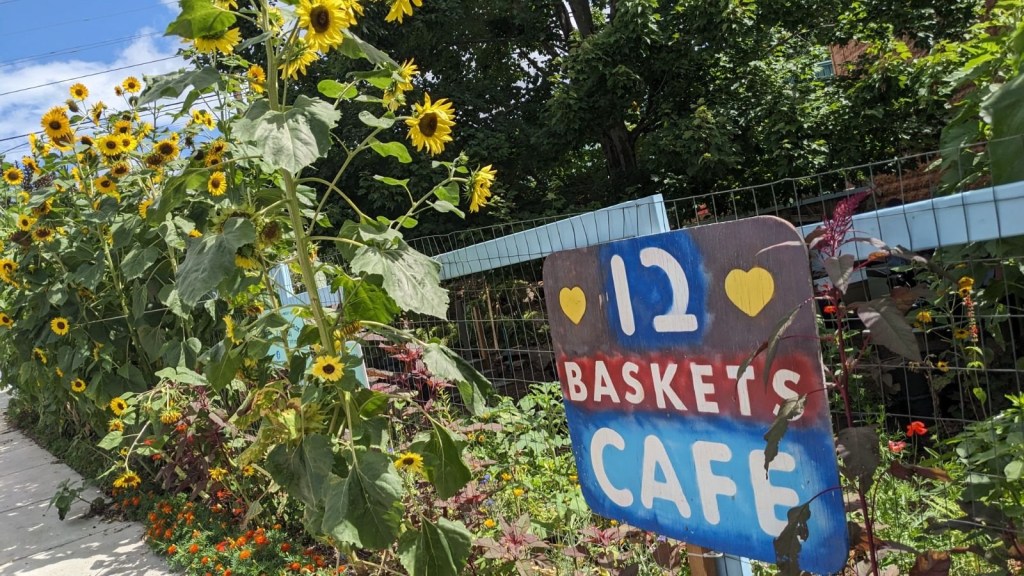
I think so. But I mean, we really want to focus on the producers in this bio region. And the ones you using is guaranteed from seed a big deal. So yeah, we want to have a local impact. And we want to be able to it’s a highly relational sale. And so we want to, we want to see what that dynamic can be like, and I want to see how we, here we have all these people with lots and lots of money who come in here. And they’re kind of intrusive in lots of ways but they have lots of money to to buy things that are good for the for the planet and themselves, you can count on their self interest. You know, they come here to get pampered right spas and things and that kind of thing. And so and they have money and they tend to be pampered and we think they’ll want to be connected to the planet in a way that your your Madison was not ripped out of the Riverside I care we want them to, to care about in the environment. Come here for pampering and have money. And we want that the bonus they can pay to build the infrastructure for the producers, many of whom can’t make a full living so it’s to get the producers economically independent. It’s what been starting to use that we’re we’ve got a deep partnership with the folks at 12 basket. It’s Asheville poverty initiative, and we’re starting to hold all our meetings there and we like our story together. So that’s just a thing that’s happened. What he says is that we were having discussions about economic independence as opposed to, you know, dependence or not getting by,
20:18
right. Yeah, I love that. And so your focus is mainly on Asheville. Is it broadly western North Carolina, is it sent drop off? Yeah.
kevin jones 20:27
Yeah. The 18 counties are seen as a region by the folks here. That’s great. I mean, that’s that’s what Western North Carolina 18 counties.
20:39
Yeah, I think of it is given that this is very much an earth based endeavor, I think of it in terms of bio region. So my guess is that any is likely to find that the sort of economic unit of interest ends up being something that is consonant with a bio region. So Western Appalachia, but the the sort of nexus of healing in western, you know, Appalachia is is really Asheville. That’s where
kevin jones 21:18
a little bit but yeah, that’s kind
21:21
of the up and the bio region.
kevin jones 21:22
Yeah, right.
21:24
That’s right where the 18 county region, but yeah,
kevin jones 21:28
the spots where they make their money are within an hour. of Asheville.
21:36
Any I know you are still in the throes of academia. And so I want to you know, just touch base about kind of what moving forward your your calendar and schedule looks like. So we can think about sort of creating this as a project that works for you within the context of you being a human being with like, life. Vantage.
21:59
Thank you. I appreciate that a lot. Yes, so in terms of school, I have five weeks of class left, and then graduation is May 12. So I would say Until then I have much more limited capacity and then starting in May, probably from beginning of May honestly. I have a lot more capacity going through the summer as well. And I know you are in September as kind of a end timeframe. But has that changed? What are you thinking?
kevin jones 22:33
Well, we are planning to do a really low conference here. We were my family business, which is separate from this. This is I got a couple of people to put up some money around this fund. And I’m exploring this with the philanthropy that I parked at Eagle Market Streets that I and they and other folks did. And so we are going to do something really local. It looks like we might lead to have it be you know, kind of faith based entrepreneurs, local and some other ones but it’s really kind of a we do big conferences, national ones, so that our next one is in May. And it’s in Chicago and MacArthur Foundation and the principles are all in this this is just what what can be local. And we think we can have an entrepreneur focused conference with a good sprinkling of faith based folks because that’s where some of our support for the business comes from. And we try to we’re trying to help people have faith and learn how to engage in their local economy and there’s they’ve been doing a lot more post George Floyd and so we’re, we help them do that. And then we engage with the black church in a big way. And so that’s that’s what we do. So yeah, if this could be on a local event, then we’re also doing a class and that’s this is not real. And so we are doing my daughter and I are doing this thing called an act local class. And it started last week and it goes for 10 more weeks. It is probably not really within your timeframe but it’s helping local people get engaged in things like you know, keeping the rivers healthy and we’re bringing it in mountain true and the rights of nature rights or river folks and all that kind of stuff or workforce housing or you know, this give to invest tool and other things like that food security and it’s it’s really for folks, you can these are groups already doing stuff and you can get engaged. And so this this fits as a thing people would want to be interested in but it’s there’s not really a community engagement hook for this. I don’t think I don’t know the Leader What do you think?
24:53
Um, I think that makes sense. So is that by way of saying that you think managing toward a September timeline is Yeah,
kevin jones 25:02
yeah, Mandarin for that September sorry. So we will have a local conference and we would love to be able to say this is what this industry is needs. You know, all that kind of stuff. And we’ll know. What’s that?
25:19
When do you imagine that conference?
kevin jones 25:21
It’ll be in September. That is in September. Gotcha. Yeah. And we’ll we’ll be at the Why am I if you know them anyways, it’s an old African American lodge downtown that we’re close with. Okay, cool. Yeah, that would be great. Thank you. Yeah,
25:39
I’m really excited about this. And I don’t know Lita Are you main point of contact who both
kevin jones 25:47
know she is the main point of this. I’m working on several things and I’m just in on the the initial conversations with some of these and everything else will be Lolita and then I’ll hear about it.
25:58
Pretty much awesome. And maybe we can set up time. Whatever works for you, me, I’m happy to keep going now even if I don’t, I’m not doing the research until May. I figure out what cadence works for you. I really like having accountability throughout so that I can answer questions. Yeah. Can
kevin jones 26:19
you handle an hour a week?
26:22
Oh, yeah, for sure. Okay.
kevin jones 26:23
Once you guys schedule, you know that and I’ll be in when I can. But if we can, you know, put things up in a Google Doc and I can, you know, I can drop things in there a synchronously and there are also people who use these, you know, little boxes and rows, if you know what I mean. And there are a lot of people who are yellow Well no, I mean, like you like the column sheets, you know, like like spreadsheets and Google Sheets I hyperventilate type of Yeah, I just need to say I no longer hyperventilate when I access a spreadsheet. So you know, I couldn’t be part of it. Exactly, you know, every two weeks or so, I didn’t manage to enter something, you know, just go crazy on me.
27:10
I actually at one point had my Microsoft Office user specialists in Excel and Amandus and and really am the biggest spreadsheet geek in the world. Wow.
kevin jones 27:20
Well, that’s great. I said my spreadsheet
27:23
learn from you. Yeah. So I could see spreadsheets are great. I very much thinking org charts and numbers. But you know this since this is more of a top down kind of eye level. I think the narrative might be you know, really,
kevin jones 27:41
I could Yeah, even a bigger part. We you know, look here, point there. Yeah. Yeah,
27:49
I think very much. One of the things this is, I know because I understand in your background, that you get what we’re talking about with using sort of our alternative financial structures to to break down barriers in this market. But, you know, for example, with my father when I tried to talk to him about it, although he’s a very effective change agent, his eyes glaze over because he’s having a hard time understanding the narrative. So like, even just the story, being able to tell the story of Sarah, you know, and why this would help her. I’d love to have to be at the point where if somebody looks at us and says so white Why are you focusing on Biomedicinals that we understand the market from the top down well enough to say, here’s, here’s the compelling story around right around this in a way that will get people engaged because I think that the thing that’s really going to make the difference in terms of whether this tool gets traction and in this vector is is how compelling that story is. Can we tell it to people in a clear and simple way that makes them understand they go I love that. I want to learn that. Right? That’s
kevin jones 29:00
really good. Yeah, that’s exactly right. Right. Okay. I think that means I’m gonna let you guys finish up and do that from there and that loop me in but but let’s share some some space asynchronously. Okay. Thank you. Thank you. Good to see you. Bye. Awesome.
29:21
So I hope that answered more questions and it created. If not, I’m on standby at any point to be a resource for you.
29:30
No, I think that’s great.
Act Local blogs on the Giving2Invest movement
https://neighborhoodeconomics.org/wiki/index.php/Act_Local_blogs_on_G2I



 ActLocalAVL